
 By Tristan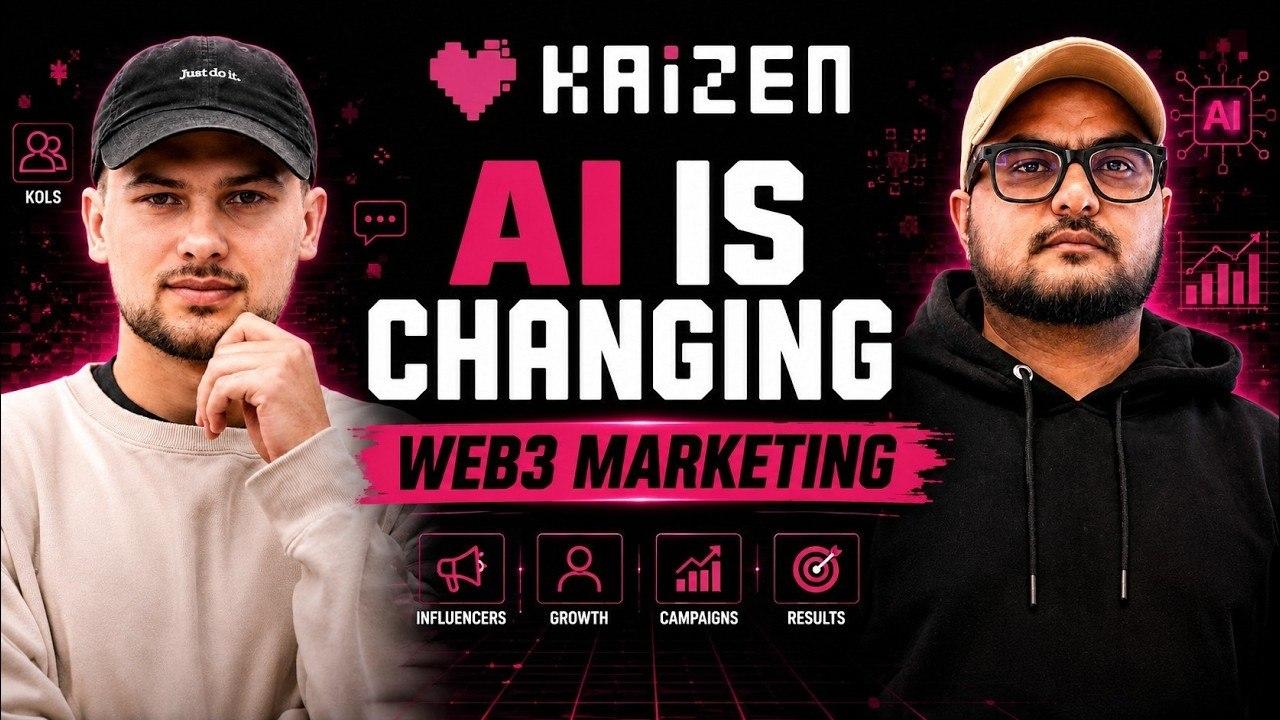
In this episode of The Blockopedia podcast, LuvKaizen founder and CEO Matt sat down with The Blockopedia’s co founder Mohammad Ahmad Khan to unpack nearly a decade of Web3 marketing experience, from the ICO era’s advisory boom to today’s KOL campaigns, and to explain why most crypto projects are still spending their marketing budgets on the wrong things entirely.
Matt‘s road into Web3 marketing started almost nine years ago, during the first ICO boom of 2017. Back then, his first agency, KHQ, connected projects raising millions with advisors, a business that naturally evolved into KOL and influencer marketing as the industry’s needs shifted. That agency eventually grew into LuvKaizen, a full circle marketing operation spanning strategy, KOL campaigns, PR and, increasingly, AI driven automation. Matt credits the shift less to planning and more to simply following where the industry’s real pain points kept moving.
Product Comes Before Promotion
Asked what separates projects that actually grow from those that just spend heavily on marketing, Matt didn’t hesitate: usage. He pointed to Ethereum as the clearest example, a network that kept iterating on real technical problems like fees and speed rather than relying on hype cycles to carry it. Most ICO era projects that failed to stick, he argued, had plenty of marketing spend but nothing underneath it worth returning to.
The Problem With Performance Based KOL Deals
Matt was candid about a structural tension currently playing out across exchange marketing. Many partnership teams want KOLs to generate large trading volume commitments while offering minimal upfront payment, an arrangement he said rarely attracts serious influencers who already understand their own value. He described the exchange marketing space as particularly volatile, with shifting affiliate terms and, at times, frozen funds, which is part of why LuvKaizen leans toward stable upfront fees rather than pure performance based arrangements.
Why Airdrop Farming Died
Looking back at what worked in crypto marketing years ago but doesn’t anymore, Matt pointed directly at the old airdrop distribution model, projects handing large token allocations to accounts with big followings, many of which turned out to be bot farms with zero real engagement. The lesson he’s carried forward is blunt: know exactly where your actual audience sits and what they’re reading, rather than chasing raw follower counts.
What Metrics Actually Matter
Beyond basic impressions and likes, Matt said LuvKaizen tracks engagement quality and bot activity through multiple internal tools, since surface level metrics alone can mask campaigns that generate visibility without generating real users. The KOLs who move the needle long term, he noted, are the ones tied to a project for months rather than a single post, building the kind of ongoing trust comparable to an athlete’s long running brand endorsement.
Where AI Fits Into Marketing Now
Matt estimated roughly 90 percent of KOL sourcing, reporting, and campaign management work is headed toward automation, a shift LuvKaizen is already building into its own self service platform. What won’t be automated, in his view, is strategic know how, creative direction, and the actual copy and visuals that make a campaign resonate. He sees this playing out at a much larger scale too, predicting that within five to ten years, autonomous AI agents rather than human teams may be the ones actually running major token launches and treasuries.
What a Real Campaign Budget Looks Like
For founders wondering what a serious KOL test campaign costs, Matt was specific: he recommends starting around $10,000, distributed across 20 to 30 KOLs to generate enough content variety to actually test messaging and calls to action. Pricing scales heavily by tier, from roughly $200 per post at the smaller end to $10,000 or more for top tier creators delivering threads and multiple placements. For projects with tighter budgets, he pointed to an underused alternative: SEO and PR, calling high intent, low competition keywords one of the most overlooked growth channels still available in crypto.
Looking Ahead
Matt remains bullish despite the current bear market, pointing to decentralized exchange volume that’s already roughly ten times higher than the last cycle’s peak, and predicting a possible resurgence in digital collectibles alongside the rise of agentic, AI driven trading. His closing advice to founders watching echoed something close to Steve Jobs: stay hungry, keep shipping, and remember that most marketing that actually goes viral costs nothing but a genuinely good idea.
Watch the full conversation: https://www.youtube.com/watch?v=gkqvnGtFBY4